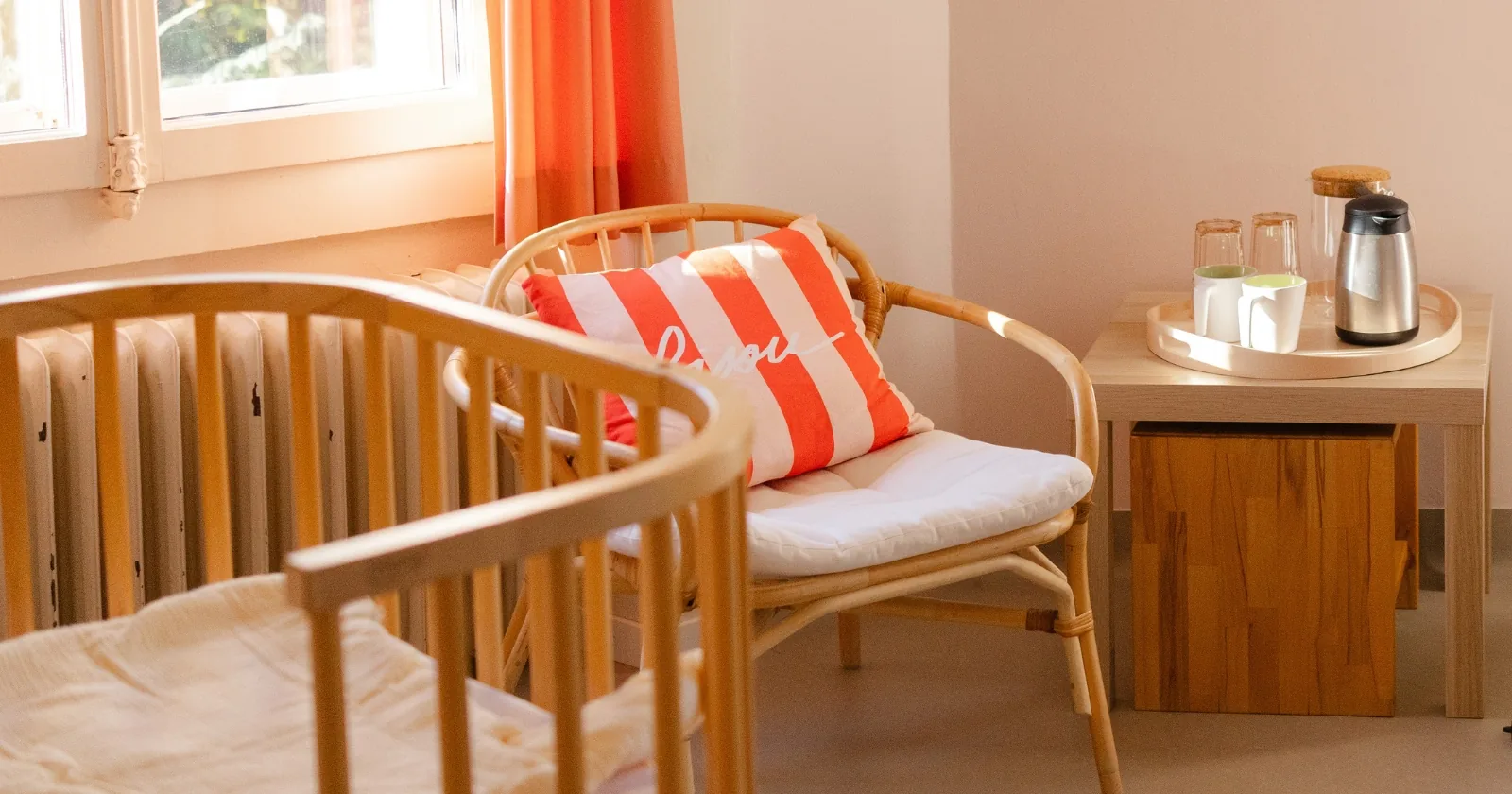
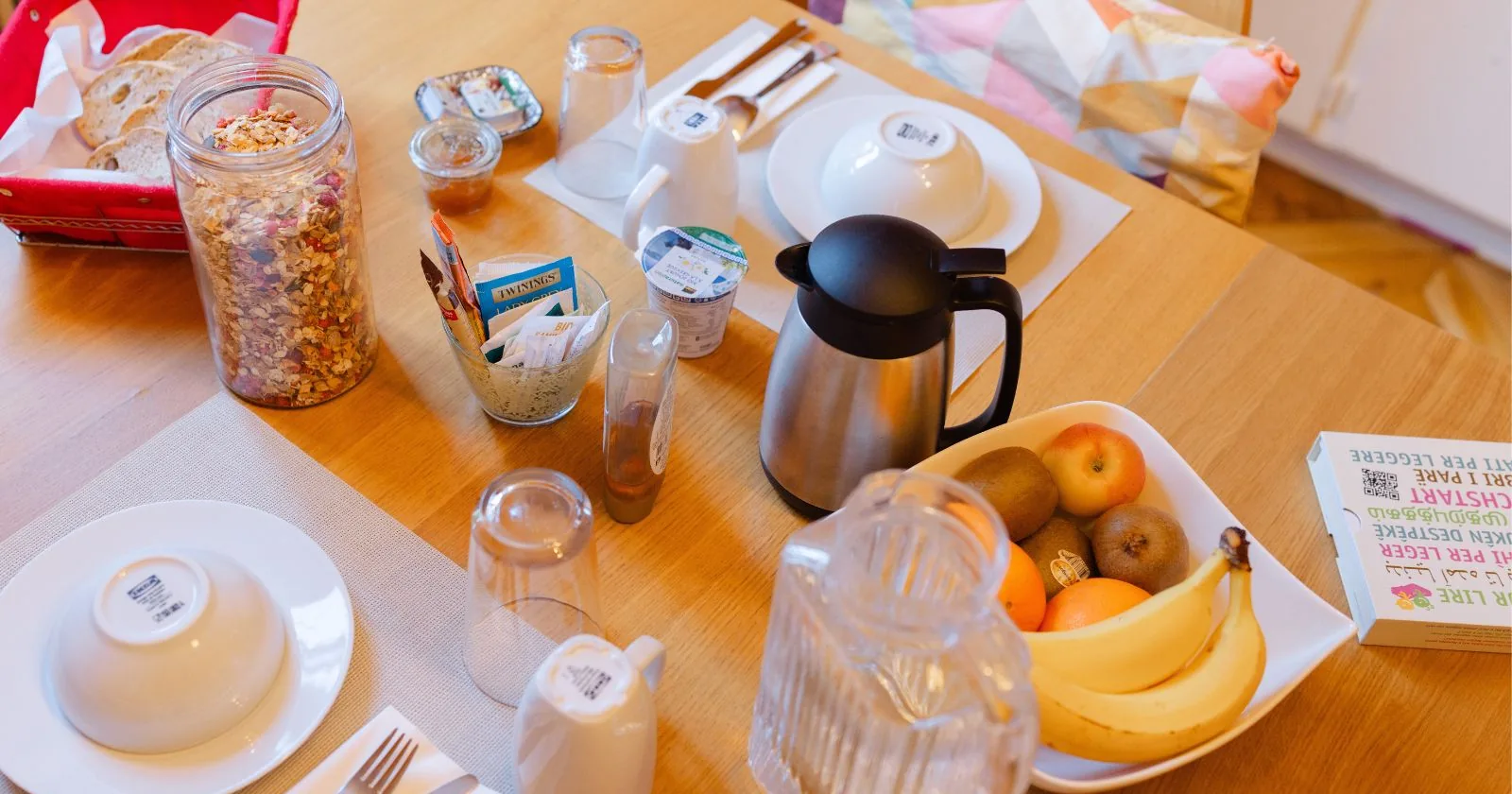
Meals at La Roseraie: La Petite Cigogne is our caterer
Delicious meals to take care of yourself after the birth!
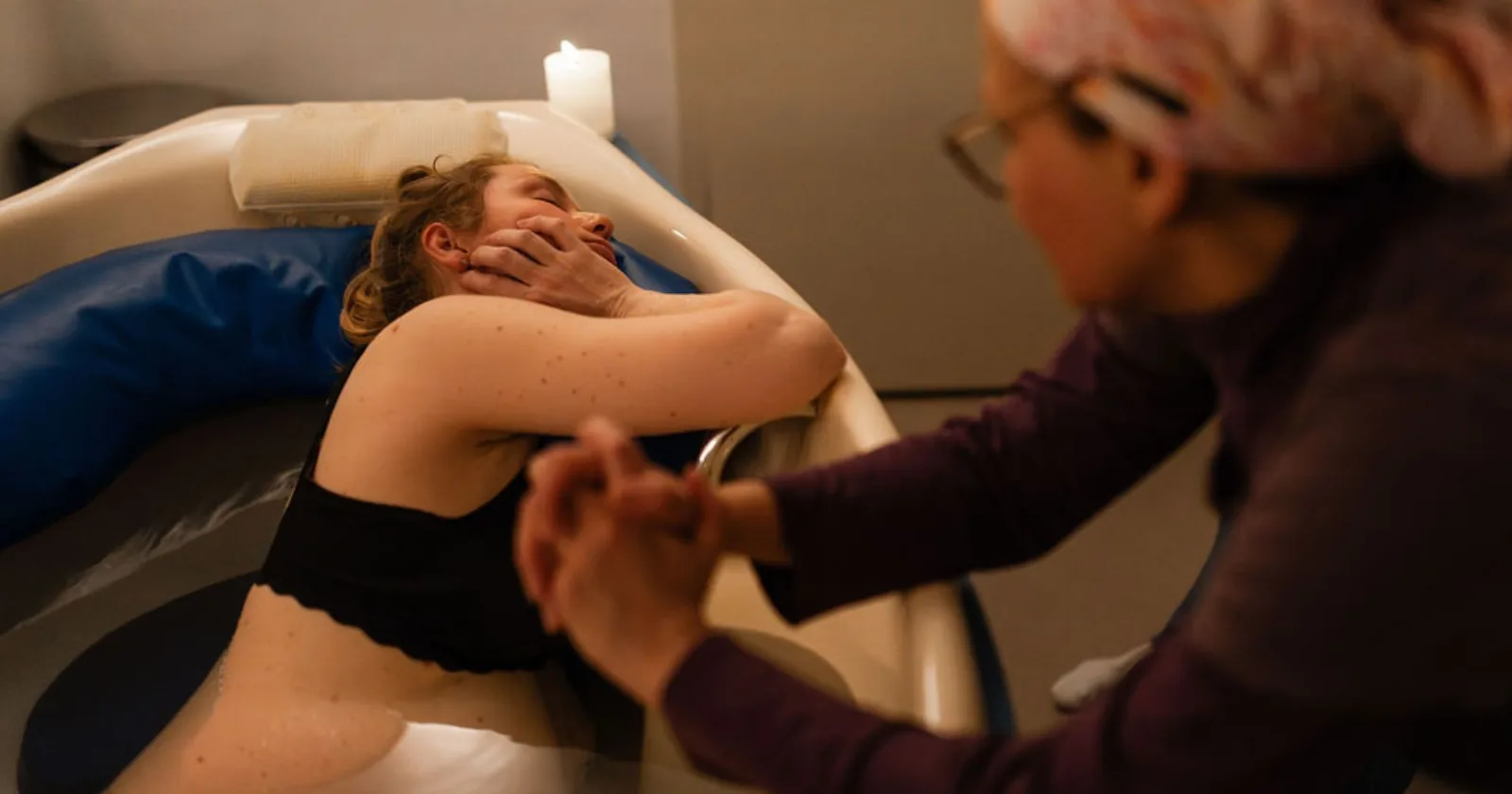
Care that reassures a woman in her own abilities, supports her and gives her the safety she needs.
It has been shown that continuous emotional and physical support from one person during labour and birth brings many benefits: shorter labour, noticeably less medication and fewer instrumental births, and better adaptation of the newborn to life outside the womb.
We do everything we can to support each couple as they are, to reassure the woman in her own abilities, to support her and to give her the safety she needs. Personal antenatal care, a birth plan drawn up towards the end of pregnancy and meetings between midwives and couples close to their due date help us understand each couple’s needs and wishes.
We give a central place to the partner (or to the person the woman has chosen to be with her), so that she can recover her privacy and take the leading role in the birth.
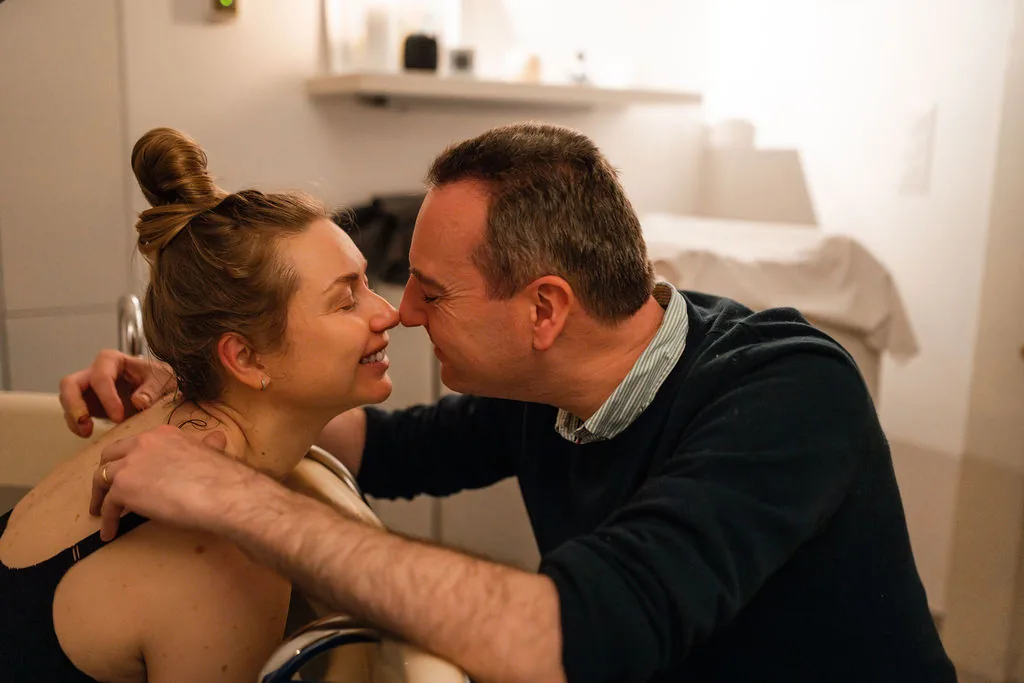
The midwife stays discreet and attentive. She observes, monitors and listens to what is happening in the woman’s body and behaviour, to pick up on her needs or any warning sign.
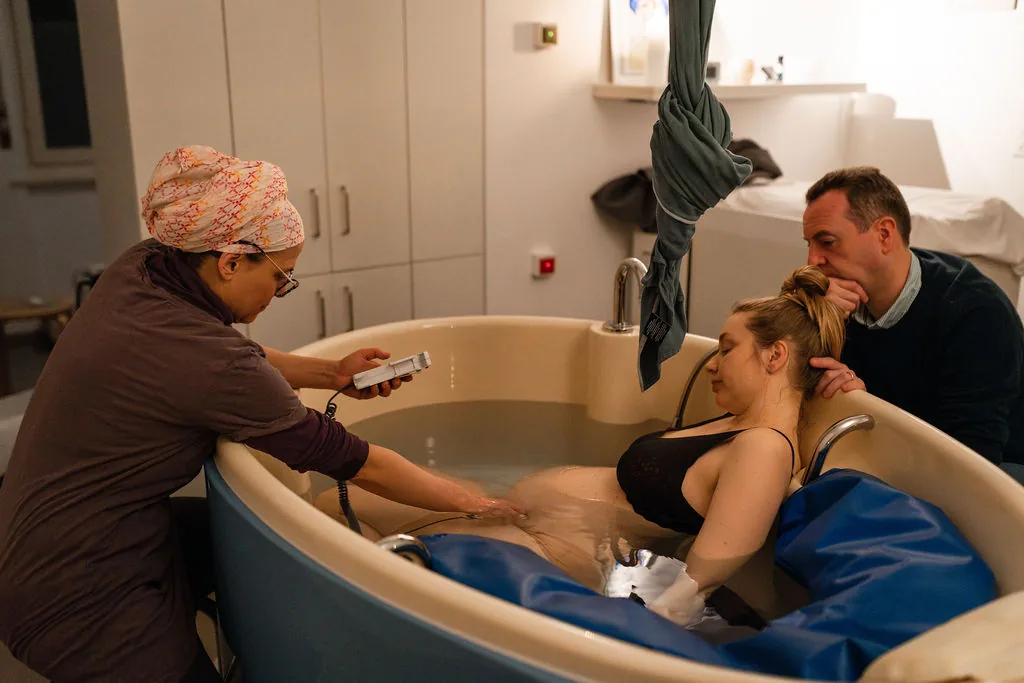
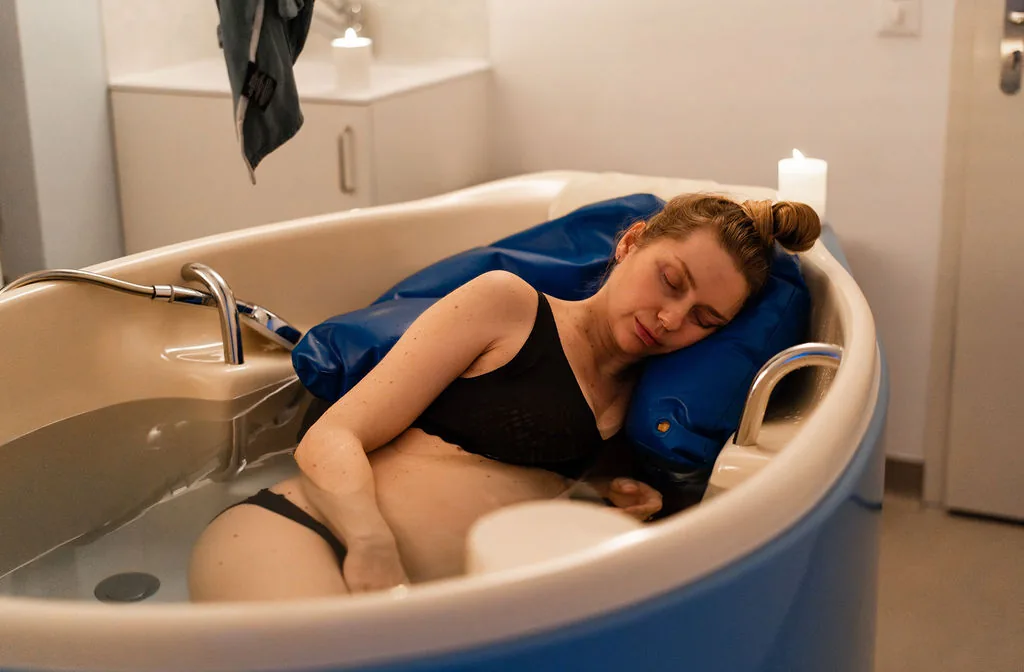
The two birth rooms are designed to support physiological birth: the setting is welcoming and harmonious, the layout encourages movement through the different stages of labour, and the birth pools are valuable for dilation and birth for women who wish to use them.
The medical equipment for care and resuscitation is stored so that it is accessible at all times, but out of sight if everything is going normally. The large garden is available for walking during labour.
Noise from the birth centre’s activities is kept down when a woman is in labour, so as not to interrupt the natural process.
Women are offered different ways to cope better with labour: massage, changing position, walking, music, aromatherapy, homeopathy, acupuncture, a bath and a TENS® machine (Transcutaneous Electrical Nerve Stimulation)…
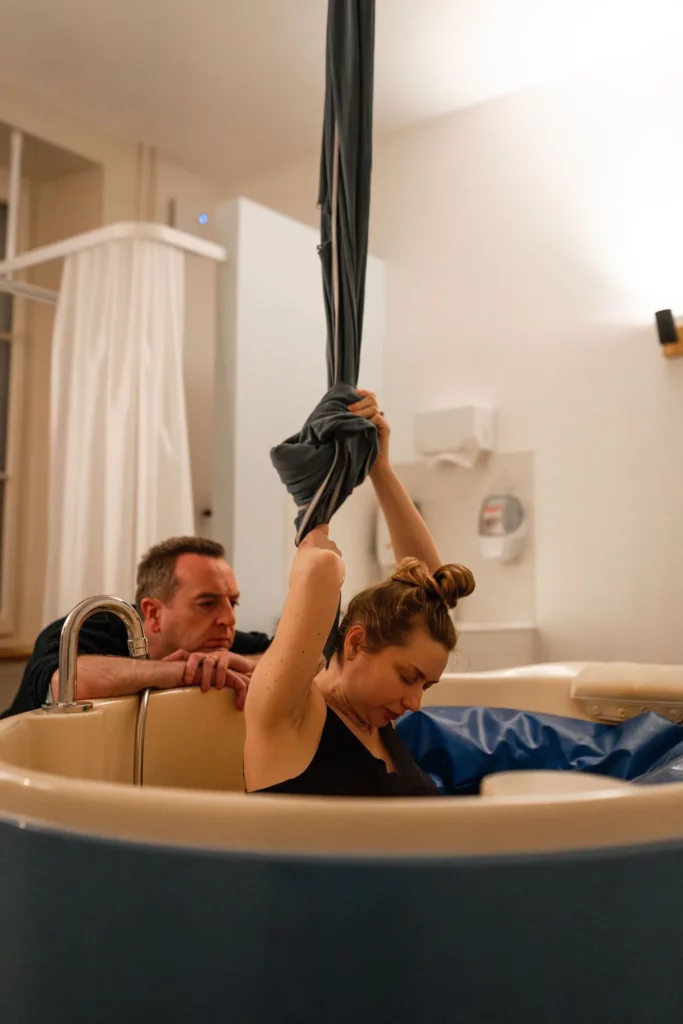

If you would like a water birth, during your appointments your midwife will explain how water can help labour, as well as the safety rules and conditions that go with it.
The aim of the BOREL study (PDF, in French) is to evaluate our work in order to encourage women and midwives towards physiological birth. It also aims to prompt the obstetric world to reflect on practices that respect physiology more.
The midwives have all the skills needed to care for a woman in physiological labour. Our protocols are based on the recommendations of the WHO, NICE and other learned societies in obstetrics. They also draw on each midwife’s experience and are enriched by complementary therapies within reach of every midwife on the team. They are updated regularly. The team’s emergency care training is refreshed every year.
The whole team can carry out a simple perineal repair, give emergency medicines and start resuscitation of an adult or a newborn.
As soon as the obstetric situation requires medical care, or the woman wants an epidural, a transfer is arranged to the nearby HUG maternity unit (300 metres away), on foot or by ambulance depending on the urgency.
Interventions during a birth at the birth centre are kept to what is strictly necessary. We do not offer induction or medical acceleration of labour and birth, nor epidural analgesia.
Most of our care consists of monitoring the progress of labour and birth, and in particular the wellbeing of mother and baby, as well as supporting the woman in managing pain.
Read also
Delicious meals to take care of yourself after the birth!
The best possible start for your baby.
The first moments of life are spent as a family.